
You may have seen car owners using screw jacks to lift tires, or factory workers using jacks to press molds, but you may not have seen the application of jacks in bridges. Because this type of workplace has a high level of danger, requires high technical skills from participants, and has a relatively concealed working environment.
Therefore, the jacks we usually see and use are mostly small tonnage jacks. The load-bearing capacity of small tonnage jacks is mostly between 1 ton and 30 tons, and jacks over 30 tons belong to large tonnage jacks. And jacks, especially large tonnage jacks, naturally come from extraordinary backgrounds due to their heavy burden.
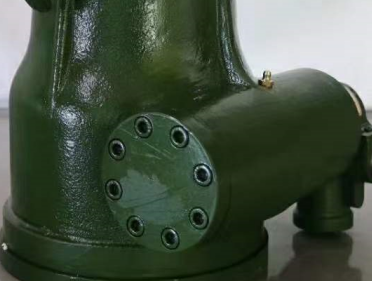
After careful observation, have you noticed that the ratchet parts of large tonnage jacks such as 100 ton screw jacks are different from those of small tonnage jacks. The internal ratchet and gear of its ratchet group are large in size and tonnage. In order to properly wrap these components inside, the protective sleeve of the ratchet group is set long and thick, and multiple fixing screws are used on the other side to fix the top cover of the ratchet group.
So these tightly combined mechanical devices are necessary to ensure that the large tonnage screw jack does not encounter any adverse situations when lifting heavy objects, thereby improving its safety factor.
Tag:
2026-09-16
2026-09-16
2026-09-16
2026-09-09
2026-09-09
2026-09-09
2026-09-02
2026-09-02
2026-09-02
2026-08-26