
In summary, a hydraulic jack is a mechanical device that relies on the lifting and contraction of a piston to lift heavy objects. In recent years, with improvements and enhancements, the performance and types of jacks have gradually increased, and there are also hundreds of specifications and models of jacks. We can simply distinguish hydraulic jacks from the following three aspects.
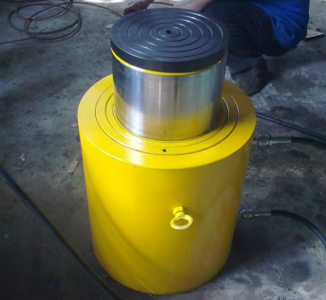
1. The difference in appearance is mainly reflected in the change in the height of the body:
As the rated bearing capacity increases, the cylinder wall thickness and height of the same type of jack also increase. Due to space limitations in usage scenarios, the height of the jack body also adapts to the size of the space, with the lowest body height being only 30mm; there are also double acting jacks with a height of up to 1219mm.
2. The difference in usage scenarios is mainly related to the type of jack:
In pipe jacking construction projects, we generally use long stroke jacks (there are specialized jacks for pipe jacking in engineering). Thin top is suitable for places with extremely limited space, such as lifting large rolling mills in steel mills, adjusting welding structures, and lifting other mechanical maintenance. In the case of bridge lifting, multiple thin roofs are generally used for simultaneous control and precise lifting.
Hollow jacks are used when a traction rod or steel cable needs to pass through the entire hydraulic cylinder, and their unique center hole design can complete the tasks of backward traction and forward compression. For example, maintenance of oil pipeline equipment in oil fields, assembly and use of large heat exchangers, synchronous lifting and translation of large windmills, etc. Tensioning jacks are mainly suitable for the construction of various prestressed concrete structures, as well as highway, railway, power station, bridge construction, geotechnical anchoring, landslide control, overall lifting of large heavy objects, continuous pushing of overweight and oversized items, disassembly of interference fit equipment, and so on. Pull type jacks are suitable for situations where tension and closure are required, such as the installation and lifting of propellers in shipyards. The structure of multi-level jacks and multi section tops is also convenient for achieving large stroke lifting operations in small spaces. We need to choose the appropriate jack according to the specific usage scenario during use.
3. The difference in price is related to multiple factors:
As the carrying capacity increases, the price also increases accordingly. The increase in volume and raw materials are the basis for price increase. Large tonnage also means higher requirements for raw materials and increased processing difficulty, which are the basic considerations for pricing jacks. We are well aware that hydraulic jacks with moderate prices and high cost-effectiveness are the products that the public wants. Therefore, while providing customers with an excellent product, we are constantly optimizing the production process and using the most suitable methods to provide a cost-effective jack.
Tag:
2026-08-05
2026-08-05
2026-08-05
2026-07-29
2026-07-29
2026-07-29
2026-07-22
2026-07-22
2026-07-22
2026-07-14